Are AI detectors accurate?
AI detectors are only partly accurate. The best of 14 tools scored 76% in the 2023 Weber-Wulff study, and seven detectors averaged 39.5% on AI text in a 2024 study, falling to 22.2% after simple edits. Newer benchmark scores run far higher, but a score alone still cannot prove who wrote something.
Are AI detectors accurate enough to settle a question about authorship? The published evidence says no. They are useful as a first signal, and the better ones now catch unedited AI text most of the time on public benchmarks. They fall down in three places: edited or paraphrased AI text, short passages, and human writing that happens to be plain and predictable. Every figure below is dated and linked to the study or page it came from, and vendor figures are labelled as the vendor's own.
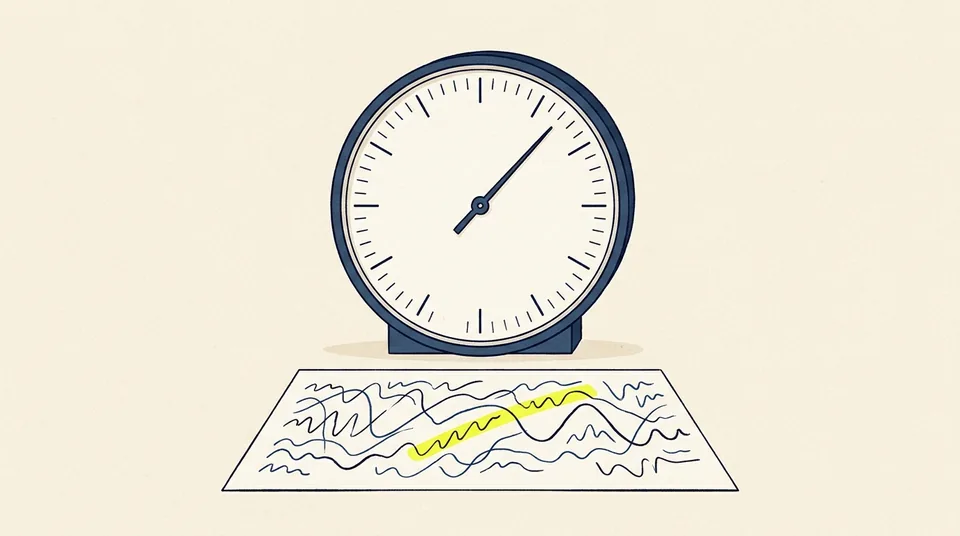
Published results for AI detectors
The tests measure different things. A detection rate is the share of AI text a tool caught. A false positive rate is the share of human text it wrongly flagged as AI. Compare tools only inside the same test.
- Independent study
- Benchmark
| Test | Tool | What was measured | Result | Date | Source |
|---|---|---|---|---|---|
| Weber-Wulff et al. 2023, 54 documents |  Turnitin | Detection rate (binary accuracy) | 76% | Source 1Independent study | |
| Weber-Wulff et al. 2023, 54 documents |  ZeroGPT | Detection rate (binary accuracy) | 59% | Source 1Independent study | |
| Weber-Wulff et al. 2023, 54 documents |  GPTZero | Detection rate (binary accuracy) | 54% | Source 1Independent study | |
| Perkins et al. 2024, unedited AI text | Turnitin | Detection rate | 61% | Source 2Independent study | |
| Perkins et al. 2024, unedited AI text | ZeroGPT | Detection rate | 46.1% | Source 2Independent study | |
| Perkins et al. 2024, unedited AI text | GPTZero | Detection rate | 26.3% | Source 2Independent study | |
| Perkins et al. 2024, 805 samples | Seven detectors (mean) | Detection rate before and after evasion edits | 39.5% before, 22.2% after | Source 2Independent study | |
| RAID leaderboard |  Grammarly | Detection rate at a 5% false positive rate | 99.5% | Source 4Public benchmark (vendor-submitted results) | |
| RAID leaderboard | GPTZero | Detection rate at a 5% false positive rate | 97.2% | Source 4Public benchmark (vendor-submitted results) | |
| RAID paper (Dugan et al.) | ZeroGPT | False positive rate on human text | 1.71% | Source 3Independent study | |
| Jabarian and Imas 2025, 1,992 passages | GPTZero | False positive rate on human text | About 0.7% | Source 5Independent study | |
| Liang et al. 2023, 91 TOEFL essays | Seven detectors (average) | False positive rate on non-native English essays | 61.22% | Source 6Independent study |
What the vendors say
| Tool | Vendor claim | Date checked | Source |
|---|---|---|---|
| ZeroGPT | Accuracy of 98.4%, false positives under 1% | ZeroGPT homepage | |
| GPTZero | Headline accuracy of 99.9% on its own demo dataset | GPTZero homepage | |
| Turnitin | Document false positive rate under 1% for documents with 20% or more AI writing | Turnitin blog | |
| Grammarly | Detection figure of 99%, with a #1 rank on RAID | Grammarly AI Detector page |
Do AI detectors work? Detector by detector
 Unreliable
ZeroGPT
It claims 98.4%, but independent tests scored it 59% in 2023 and 46.1% in 2024, and it had the highest false positive rate of the commercial detectors in the RAID paper (1.71%).
 Mostly reliable
GPTZero
Old tests were poor, but a 2025 study found a false positive rate of about 0.7% and it reached 97.2% on RAID.
 Mixed
Turnitin
It led the 2023 field at 76%, yet simple evasion edits cut its score from 50% to 7.9% in 2024.
 Mostly reliable
Grammarly
It posts 99.5% on RAID, the highest figure here, though Grammarly submitted those results itself.
Where AI detectors go wrong
Edited AI text
Paraphrasing and small rewrites are the biggest weakness. In Perkins et al., the seven detectors fell from 39.5% to 22.2% after evasion edits.
Plain human writing
Detectors read predictable wording as a sign of AI. That is why non-native English essays were flagged 61.22% of the time on average in the Liang study.
Short passages
The Jabarian and Imas paper found GPTZero vulnerable on very short texts and to humanizer tools.
Mixed documents
Turnitin says 54% of its false positive sentences sat next to real AI writing, and its sentence-level false positive rate is about 4%, by its own figures.
Old results, new versions
Weber-Wulff and Perkins tested earlier versions of each tool, and both papers warn that their results may not match today's detectors.
How detectors compare within the same test
Only compare numbers from the same study. Mixing a 2023 classroom test with a 2026 benchmark tells you nothing.
| Test | Order (best first) |
|---|---|
| Weber-Wulff et al. 2023 | Turnitin 76%, ZeroGPT 59%, GPTZero 54% |
| Perkins et al. 2024, unedited AI text | Turnitin 61%, ZeroGPT 46.1%, GPTZero 26.3% |
| RAID leaderboard, 5% false positive rate | Grammarly 99.5%, GPTZero 97.2% |
The early academic tests put Turnitin first. The newer RAID results put Grammarly and GPTZero far above anything in the older studies, but the vendors ran their own detectors and submitted the predictions.
Non-native English writers get flagged most
The strongest warning about AI detectors comes from Liang et al. at Stanford. Seven detectors, including GPTZero and ZeroGPT, flagged essays written by non-native English speakers as AI an average of 61.22% of the time (Liang et al., 2023). Of 91 TOEFL essays, 97.8% were flagged by at least one detector, while essays by US eighth graders drew almost no false flags. The authors link the bias to simpler vocabulary. The study has not been repeated on 2025 or 2026 detector versions, so treat it as a known risk rather than a current rate.
What a detector score can and cannot prove
No detector score should be the only evidence in a misconduct case.
It can show
- A detector score can tell you that a passage reads like the text a model would produce. It can be a reason to look closer, ask questions, or check drafts and version history.
It cannot prove
- A detector score cannot tell you who wrote the text, whether a person used AI for one sentence or the whole piece, or whether a plain, careful writer has simply been misread. Grammarly's own page says no detector can conclusively determine AI use.
What to do if a detector flags your work
Ask which tool produced the score, the exact figure and which passages were highlighted.
Gather your drafts, notes, outlines and version history from Google Docs or Word.
Point to the published false positive figures for that tool, linked on this page and the tool pages.
If English is not your first language, cite the Liang et al. findings on non-native writers.
Offer to explain your argument and sources in person, or to write a short passage under supervision.
Ask for the decision to rest on more than one piece of evidence.
Another detector to try
Another option is the free AI detector from Walter Writes. Its page says checks are free and unlimited, that it detects text from ChatGPT and Gemini, that it gives a percentage score for every scan and that it works in more than 20 languages. You can try Walter's AI detector here. Read its score the same way as any other: one signal, not proof.
Sources
- Independent study
- Independent study
- Independent study
- Benchmark
- Independent study
- Independent study
- Vendor claim
Questions
Short answers, with links to the dated evidence.
Do AI detectors work?
They work on plain, unedited AI text, and less well on anything else. Recent public benchmark entries reach 97.2% for GPTZero and 99.5% for Grammarly, both vendor-submitted. Independent academic tests scored older versions far lower, and simple paraphrasing cut the average detection rate from 39.5% to 22.2% in a 2024 study.
Which AI detector is the most accurate?
It depends on the test. Turnitin ranked first of 14 tools at 76% in the 2023 Weber-Wulff study. On the RAID leaderboard, Grammarly leads GPTZero at the 5% false positive setting, 99.5% to 97.2%, with results each vendor submitted. No single study covers all four detectors on this site, so compare tools only within one test.
Can AI detectors flag human writing as AI?
Yes. Liang et al. found seven detectors flagged non-native English essays as AI 61.22% of the time on average. In the RAID paper, ZeroGPT wrongly flagged 1.71% of human texts. GPTZero did better in a 2025 study at about 0.7%. Even low rates add up when a school scans thousands of essays each term.
Can a detector score prove a student used AI?
No. A score shows how much a passage resembles model output, not who wrote it or how. Grammarly's own detector page states that no detector can conclusively determine AI use. Drafts, version history, notes and a conversation about the work are better evidence. A score should start a conversation, never end one.
Why does editing AI text fool detectors?
Detectors look for predictable word choices and even sentence rhythm. Paraphrasing breaks those patterns. In Perkins et al. (2024), Turnitin's accuracy dropped from 50% to 7.9% after evasion edits, the largest drop of the seven detectors tested, and ZeroGPT fell from 31.3% to 17.3% under the same edits.
Related reading
Where to go next on the bench.
- Detectors
Is ZeroGPT accurate?
How accurate ZeroGPT is in published tests, how often it flags human writing as AI, and what to do if it flags your work.
- Detectors
Is GPTZero accurate?
How accurate GPTZero is in independent tests and by its own figures, its false positive rate, and what to do if it flags your work.
- Detectors
Is Turnitin's AI detector accurate?
How accurate Turnitin's AI writing detection is, what its false positive rate means for students, and whether it can detect ChatGPT.
- Detectors
Is Grammarly's AI detector accurate?
How accurate Grammarly's free AI detector is, what its score means, how it compares with GPTZero and Turnitin, and when to rely on it.
 Method
How we score AI accuracy
Where our accuracy figures come from, how we weigh independent tests against vendor claims, how verdicts are set, and how to report an error.